
 Flake garage floor, clear topcoat
Epoxy flooring in Independence
We apply epoxy flooring, flake coatings and polished concrete to garage, basement and business floors in Independence, Blue Springs, Raytown and Sugar Creek. We come to you.
Quick answer
What is an epoxy floor coating?
Epoxy floor coatings are two part resins that are mixed on site and applied to ground concrete to create a hard coating. To create a durable floor, a thick coating is applied. 100% solids epoxy contains no solvents and provides a coating of 10 mils or more in one coat. Water based kits provide a very thin coating. A wet coating of 7 mils will result in a dry coating of about 3 to 3.5 mils. Store bought kits will quickly wear and peel. We apply thick coatings, typically with a harder clear top coat to resist wear.
Five floors we coat, grind and polish
Click the floor you have in your property. You can find out what we apply, what issues it resolves, and the page to view full details including preparation.
Read this before booking
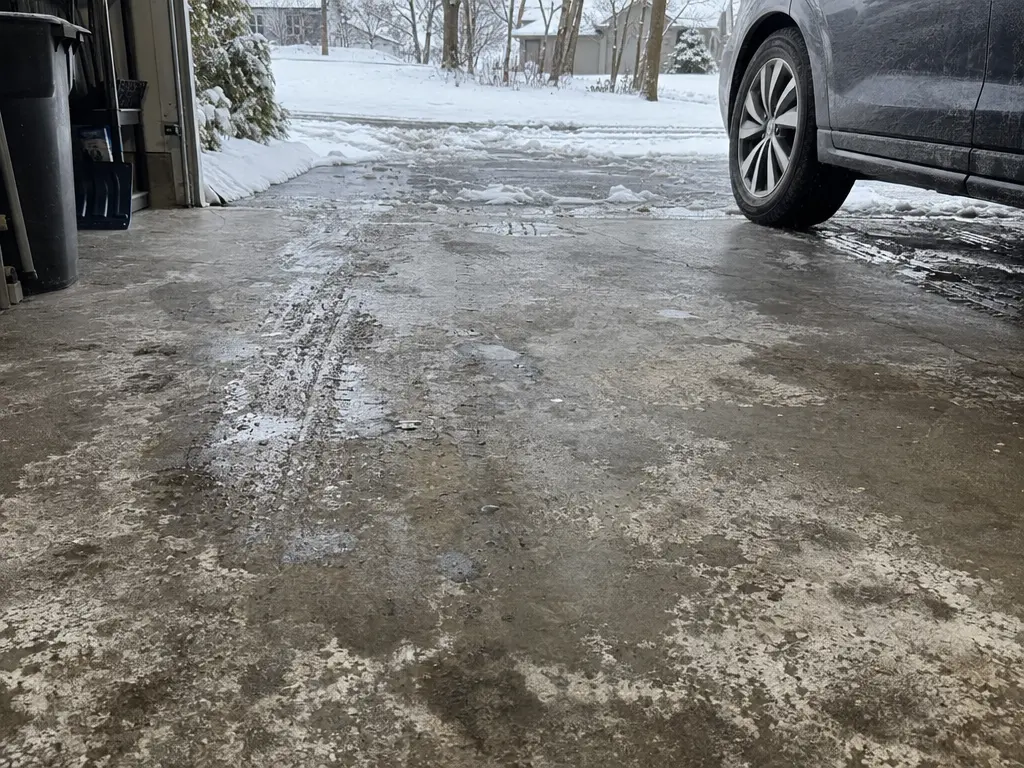
When garage floor epoxy pays off
Quick overview of whether having a coated floor in a garage in Independence is value for money. Preparation required, issues to consider and what types of slabs we would advise against right now. Spend 5 minutes reading this before booking anyone.
Read the answerPick a floor
-
Garage floors in Independence are exposed to road salt, slush and hot tires from November to March. We grind the floor, fill cracks and pitting, and apply a thick epoxy base, colored flake broadcast and clear polyaspartic top coat. Resolves dusty concrete, oil stains, salt scaling near the door and peeling retail kits.
Garage floor epoxy -
Basement floors are below ground level. We must test the concrete to determine what can be applied, and if required, we put down a moisture blocking primer. Resolves dusty, dirty floors, damp bare concrete, and peeling patchy paint along walls and under the laundry.
Basement floor coating -
Metallic epoxy coatings have pearl pigments suspended in a clear resin, and we move the wet coating to give an effect like poured stone or deep water. You choose colors for the finish; we create the movement in the color by hand. Plain gray floors in rec rooms, finished basements and shops become eye-catching.
Metallic epoxy floors -
Polished concrete has no top coat to chip or peel; we grind the concrete itself to provide a shiny smooth surface. This is a great option in stores, offices, workshops and basements where the concrete is in good condition. It prevents gray dust from bare worn floors getting on to stock, shelving and footwear.
Polished concrete floors -
Business floors experience forklifts, pallet jacks, carts, spills and daily cleaning, so the right system comes down to what the room is used for (stock room, service bay, sales area etc.). Some rooms require a thicker coating than a home garage. Resolves cracked floors, difficult to clean stains and worn coatings in high traffic areas.
Commercial epoxy flooring
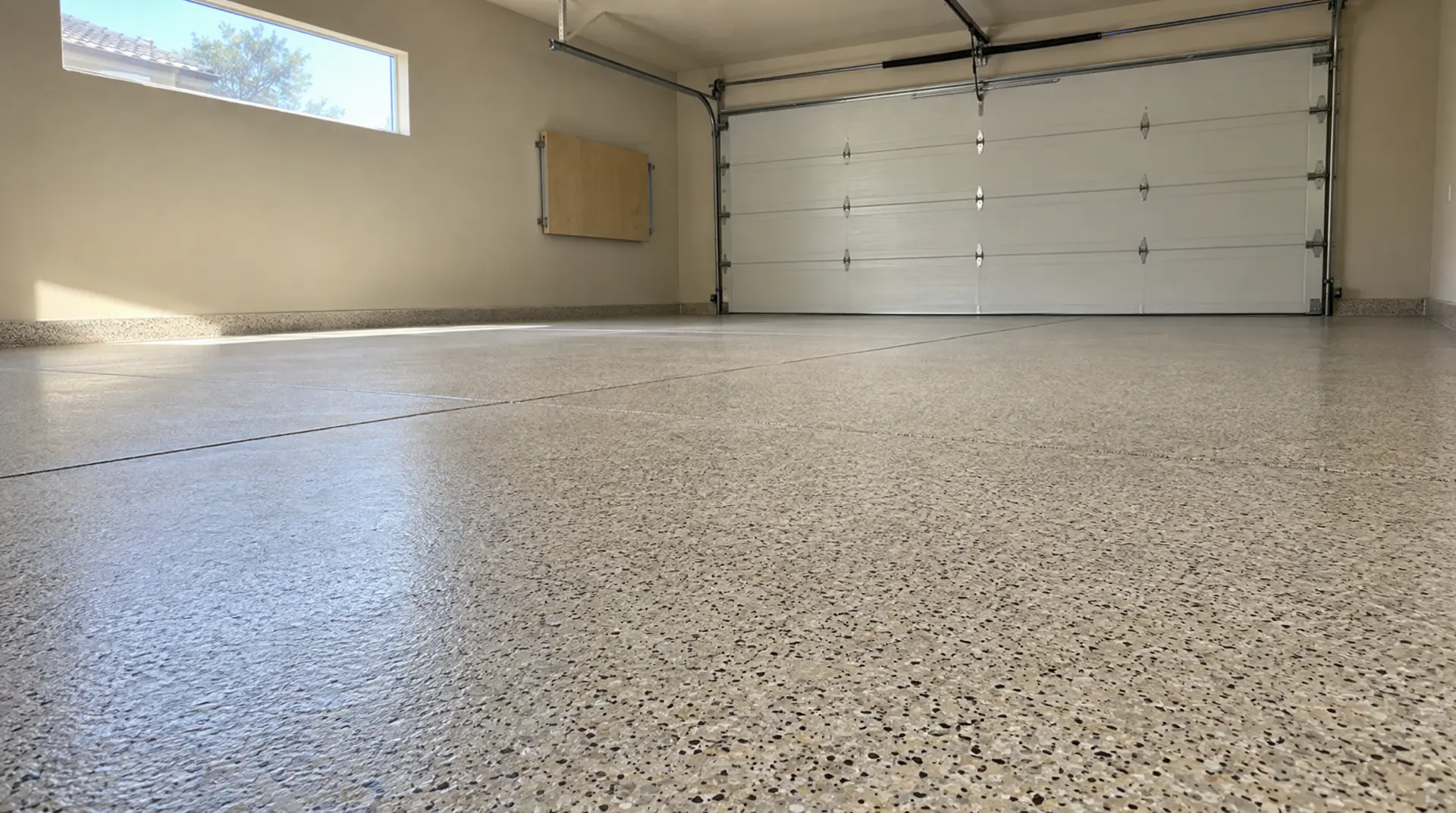
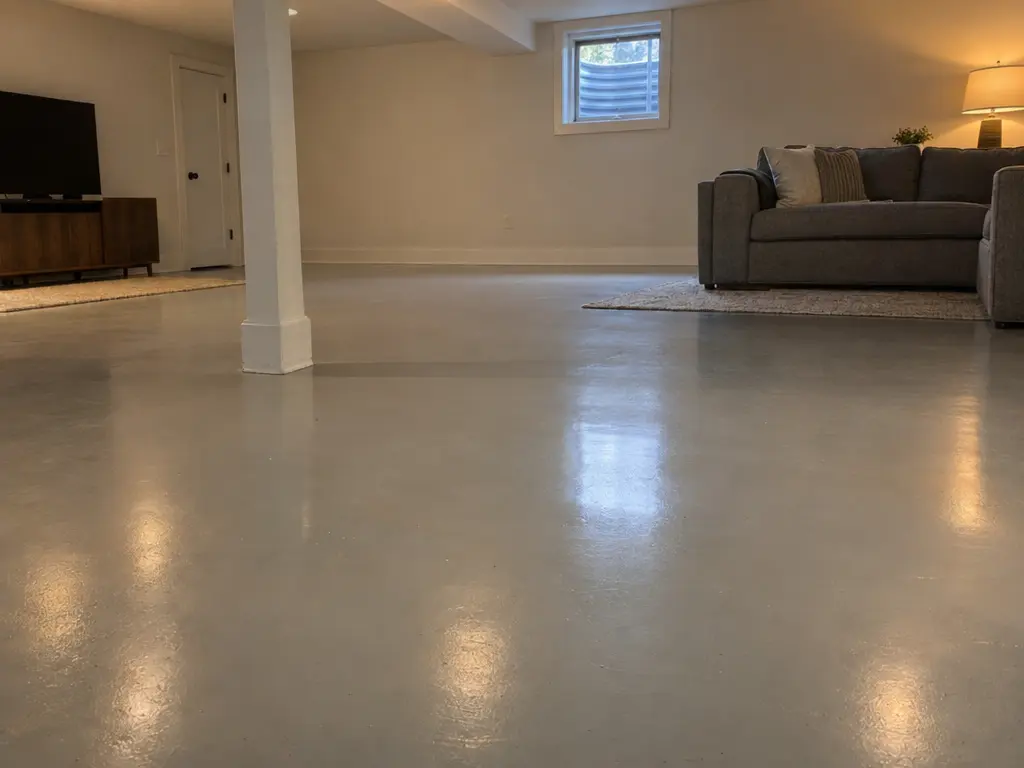
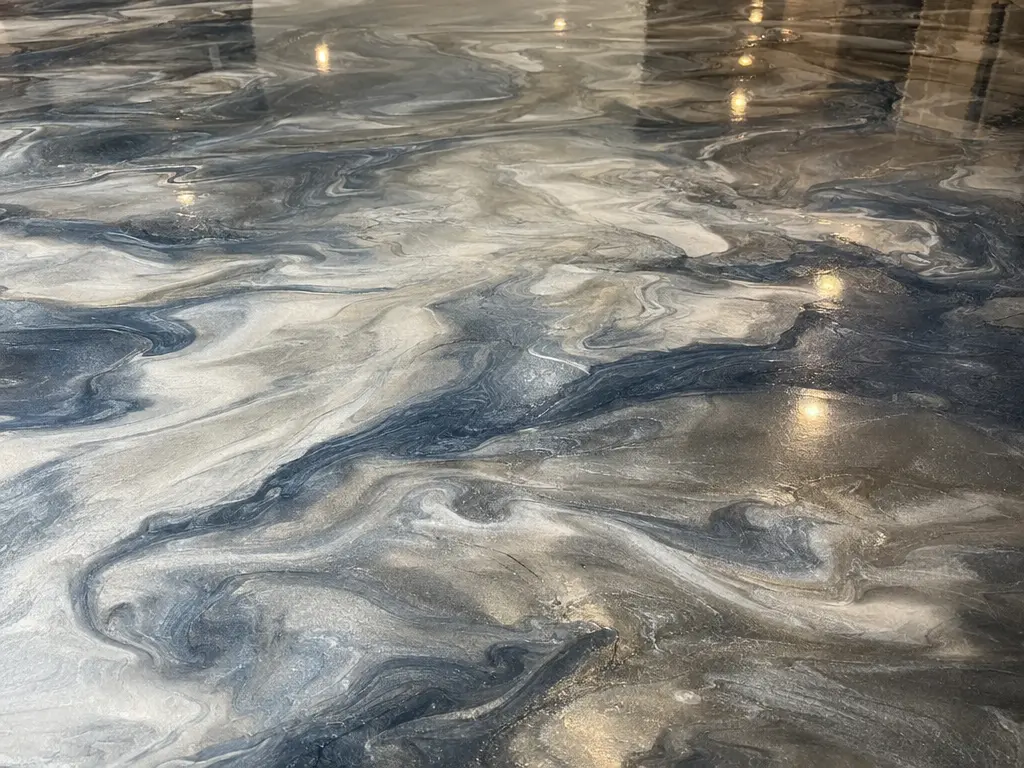
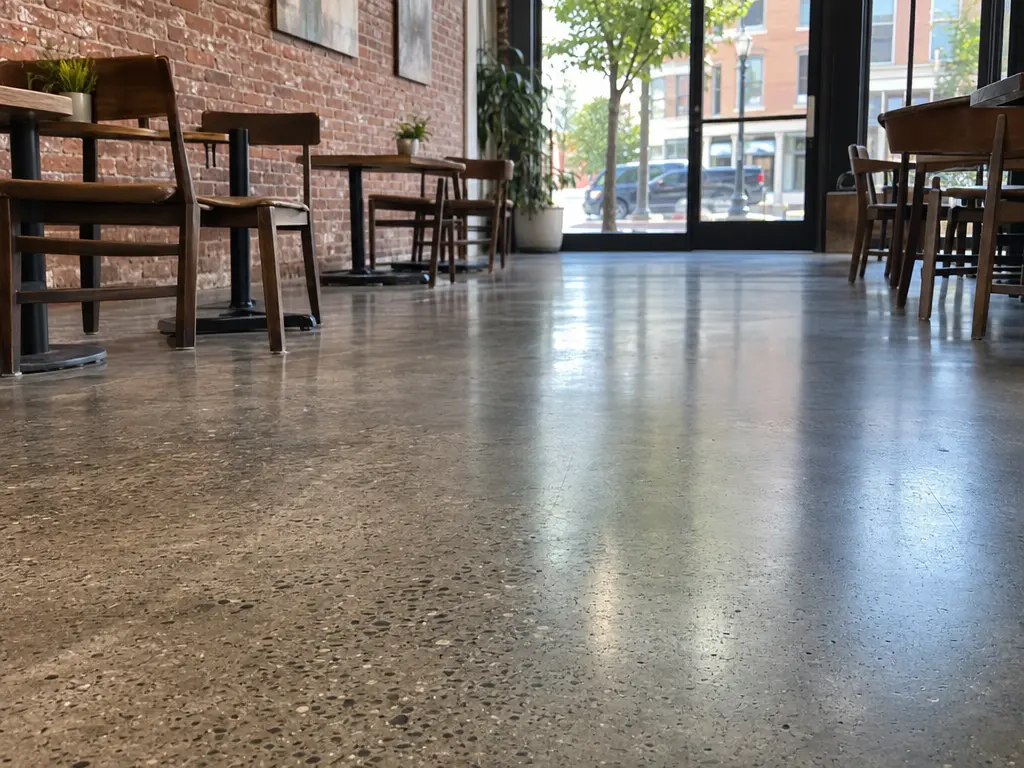
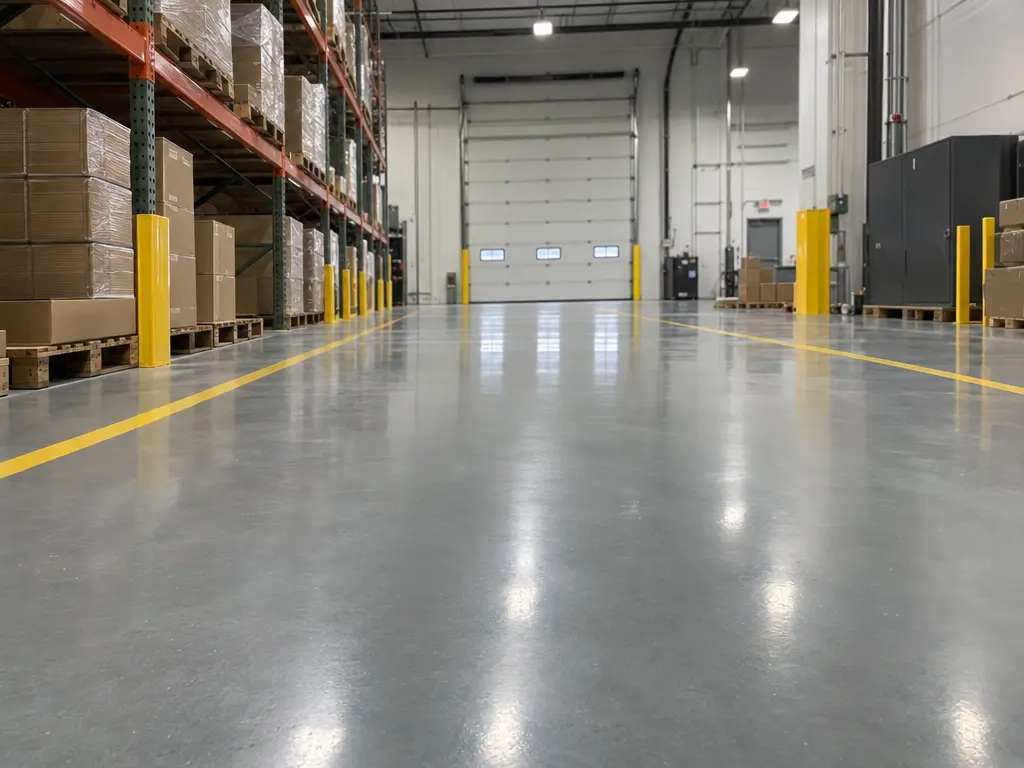
Epoxy, polyaspartic and polished concrete side by side
Most of the epoxy flooring Kansas City area homeowners request is in garages. Depending on the room, what vehicles or foot traffic it receives, how damp the concrete is, and how much sunlight it gets, the system will vary. Below is a comparison of the 3 options based on questions we are commonly asked.
| What matters | Epoxy | Polyaspartic | Polished concrete |
|---|---|---|---|
| What it is | A two-part resin that cures into a thick, hard layer bonded tight to the slab | A fast-setting resin, most often used as the clear wear layer on top of an epoxy base coat | The slab itself, ground smooth and hardened, with no coating on top of it at all |
| Time before driving | The longest wait of the three, and a cold garage in winter stretches it further still | Back in use sooner than epoxy, which matters most once the fall weather turns cool | No coating has to cure, so the floor goes back into use the quickest of all three |
| Best suited to | Basements, workshops, stockrooms, and the base layer under a garage floor system | The top layer of a garage floor system, and indoor rooms that get a lot of daylight | Stores, offices, showrooms and basements that already have a sound, flat slab to work with underfoot |
| Salt and hot tires | Holds up best in a garage when a harder clear layer goes on over it | A hard wear layer that rinses salt and slush off easily and resists tire marks | Salt can scar bare concrete, so winter slush should be rinsed off before it dries |
| How it looks | A solid color, a flake blend, or a metallic swirl in almost any shade you like | Clear gloss over flake or color, or a solid tinted finish of its own that stays its color | Satin to high gloss, showing the slab's own stone, aggregate and old marks |
Based on seeing the concrete, we decide what system to apply. Age of concrete, existing coating, dampness, sunlight and traffic in the room all play a role. Many garages in Independence will receive 2 of the 3 options, with a thick epoxy base and polyaspartic top.
Questions we hear about epoxy floors
These are the most common requests we get from homeowners and businesses around here. If you do not see your issue below, please give us a call.
Is epoxy flooring easy to clean?
Yes. As there is no grouting and no gaps for dirt and oil to sink into, most weeks can simply be dust mopped and damp mopped. Spills can be easily wiped up.
In a garage, regularly hose or mop off salt and slush from winter. Only a mild detergent is required. Avoid harsh acidic cleaners as over time this can cause dulling of the top surface.
How long does epoxy flooring take?
It depends more on the concrete. Preparation (grinding, crack repairs, and moisture primers if required) will determine how long the coating takes. Each coat must be fully cured before applying the next, and once all the coats have been applied, the floor must be cured before driving vehicles or placing heavy items on.
Colder temperatures slow epoxy, so a garage in January in Independence will take longer to cure than one in October. We can give you an accurate time frame once we have seen your floor.
What are epoxy floors used for?
Garages benefit greatly from a good concrete coating, as drips, dropped tools and road salts can be resisted. In basements, coatings resolve concrete dust and give a brighter space (after passing a dampness test).
Workshops, stores, stock rooms and clinics benefit from this coating to stand up to carts, pallet jacks and regular cleaning. Decorative metallic coatings in rec rooms and stores make for an attractive floor.
Independence, Blue Springs, Raytown and Sugar Creek, off I-70
Independence has a population of 121,629 (2024 Census estimate) and is one of 2 county seats in Jackson County. Blue Springs lies to the east (along I-70), Raytown to the southwest, and Sugar Creek to the north (along the river). As the median year of building in Independence is 1967, and about 7 in 10 houses were built before 1980, old concrete floors with patched cracks and painted basements are common in Englewood, Fairmount and Golden Acres (the city's first planned subdivision, built in 1931). Houses on North Main and near the Square date back to the late 1800s. Blue Springs has newer buildings on average, therefore epoxy flooring in Blue Springs typically starts with cleaner concrete.
- Independence the Square, Englewood, Fairmount, Golden Acres
- Blue Springs Older ranches and newer south-end builds
- Lee's Summit Lake subdivisions and newer builds
- Raytown Mostly 1950s and 1960s homes
- Sugar Creek A small river town of older homes
- Grain Valley The newest homes in the area
- Kansas City The east side, from Leeds to Blue Vue Hills
- Buckner A small town on 24 Highway
- Oak Grove New builds, many with three-car garages
Ask if your street is coveredCall (816) 325-3549
Tell us about the floor
Give us a call and tell us what type of floor you have, approximate size, current surface (exposed concrete, painted, previous coating), and what vehicles/foot traffic it gets daily. Including photos of the concrete, cracks and staining will really help! If it has had coating previously, tell us.
(816) 325-3549Open Monday to Saturday, 7am to 7pm